
ISRC Codes
All About The Unique Identifier Every Track Needs to Track Royalties
Posted by Charlie Recksieck
on 2025-06-19
An ISRC is the International Standard Recording Code - a globally recognized identifier assigned to a specific sound or music-video recording.
It does not identify the song's underlying composition (that's handled by different metadata). It identifies the exact recording: e.g. this master, this mix, this version.
It registers a recording - not a song or composition.
For instance, in The Bigfellas we recorded a lot of versions of our song "I Wish That I Were Gay" - the album version, the explicit version, the polka version, the Tinseltown mix and the Senator Larry Craig mix (ask your politically-astute parents).
Format
The ISRC format is standardized: typically in a form like CC-XXX-YY-NNNNN, where:
CC = country code where the code was issued
XXX = registrant (e.g. label or distributor) code
YY = the year the code is assigned \
NNNNN = a unique number for that recording in that year
Note to my nerd homies out there: why are we going back to a 2-digit year and creating a Y2K style panic for the software professionals of the year 2099, or our future robot overlords.
What They're Used For
Using ISRCs enables many critical functions across the music industry:
Royalty tracking and reporting - when a track is streamed, sold, broadcast, or licensed, the ISRC helps ensure that the correct recording is credited and royalties go to the right rights-holders.
I'm a member of ASCAP.As I've discussed before, the level of reporting is absolutely phenomenal.
The performance royalty agencies like ASCAP and BMI are some of the most effective digital organizations I've ever seen in my years in software.
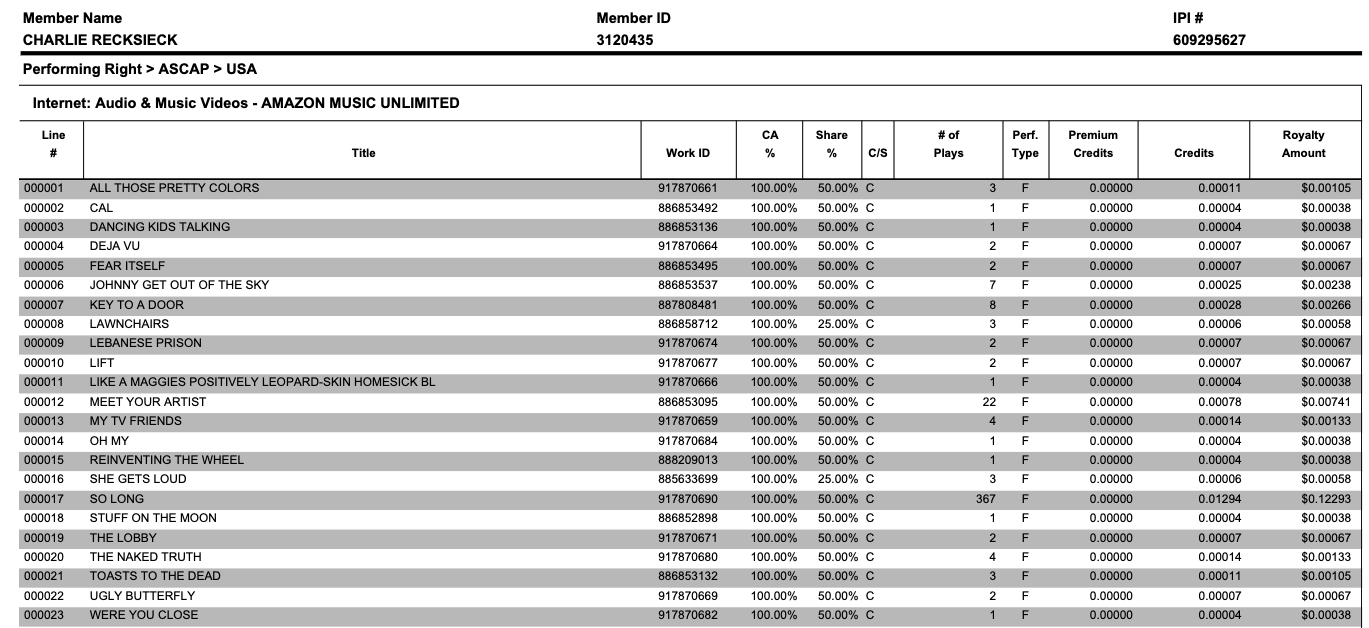
Metadata management - for digital distributors, streaming platforms, licensing agencies, radio, sync-licensing, etc., ISRC serves as a stable reference linking the audio file to its metadata (artist, track name, label, release, etc.).
Shazam relies heavily on the ISRC to identify the recording.
Version control - since different versions of the same "song" are common (remixes, edits, masters), each version gets a different ISRC. This helps avoid mixing usage data or royalties across versions incorrectly.
Anti-piracy & catalog integrity - a unique code helps digital services, licensing bodies, and tracking systems identify legitimate recordings, manage catalogs, and prevent duplication or mis-attribution.
The Cost Of Not Including Them
Any album from a record company or any even halfway serious artist has these embedded in their music; and they get their own ISRC codes outside of their distributor.
Artists get their codes from their own ISRC agency in their country.
ISRC codes can be acquired through distributor, label, studio or directly.
In my case, I get mine directly from the RIAA (Recording Industry Association of America); it’s free.
Lots of artists at my level who are truly indie and self-produced, self-promoted, self-everything usually have no distribution company "deal" or record company partner.
So, many of us get our ISRC codes from the distributor like CD Baby, Reverb Nation, SoundCloud, etc.
Bad idea.
Missing ISRCs - or ISRCs controlled by a distributor (not the artist) - can cause problems when an artist tries to reclaim masters or switch distributors.
Unsurprisingly, I know lots of unprofessional or hobbyist artists who find learning about the industry distasteful or a hassle are throwing things out there without ISRC's and kneecapping their own chances of making money or growing their exposure.
 The Takeaway
The onus on independent artists to know all of this shit seems heavy for a group of people who, let's face it, are nutty enough to waste a lot of time to try to be on stage getting strangers to love or tolerate them.
Every guitar player is supposed to be a performer, writer, agent and marketing expert.
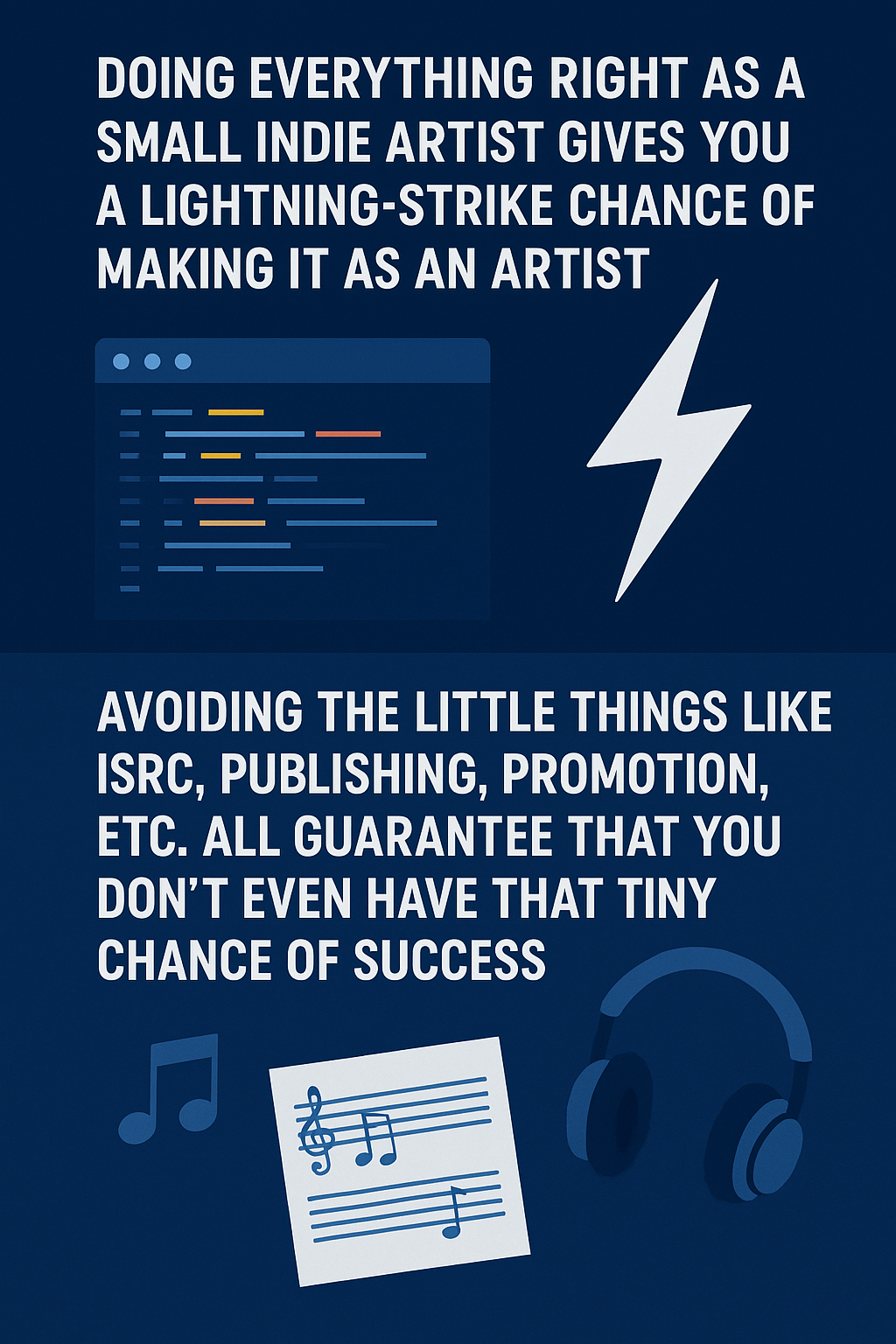
But ISRC codes are one of the little detail-oriented things for artists to deal with that really, really help them in the long run.
And the technology itself lets innovators and bots both help listeners find the music that makes them happy.

