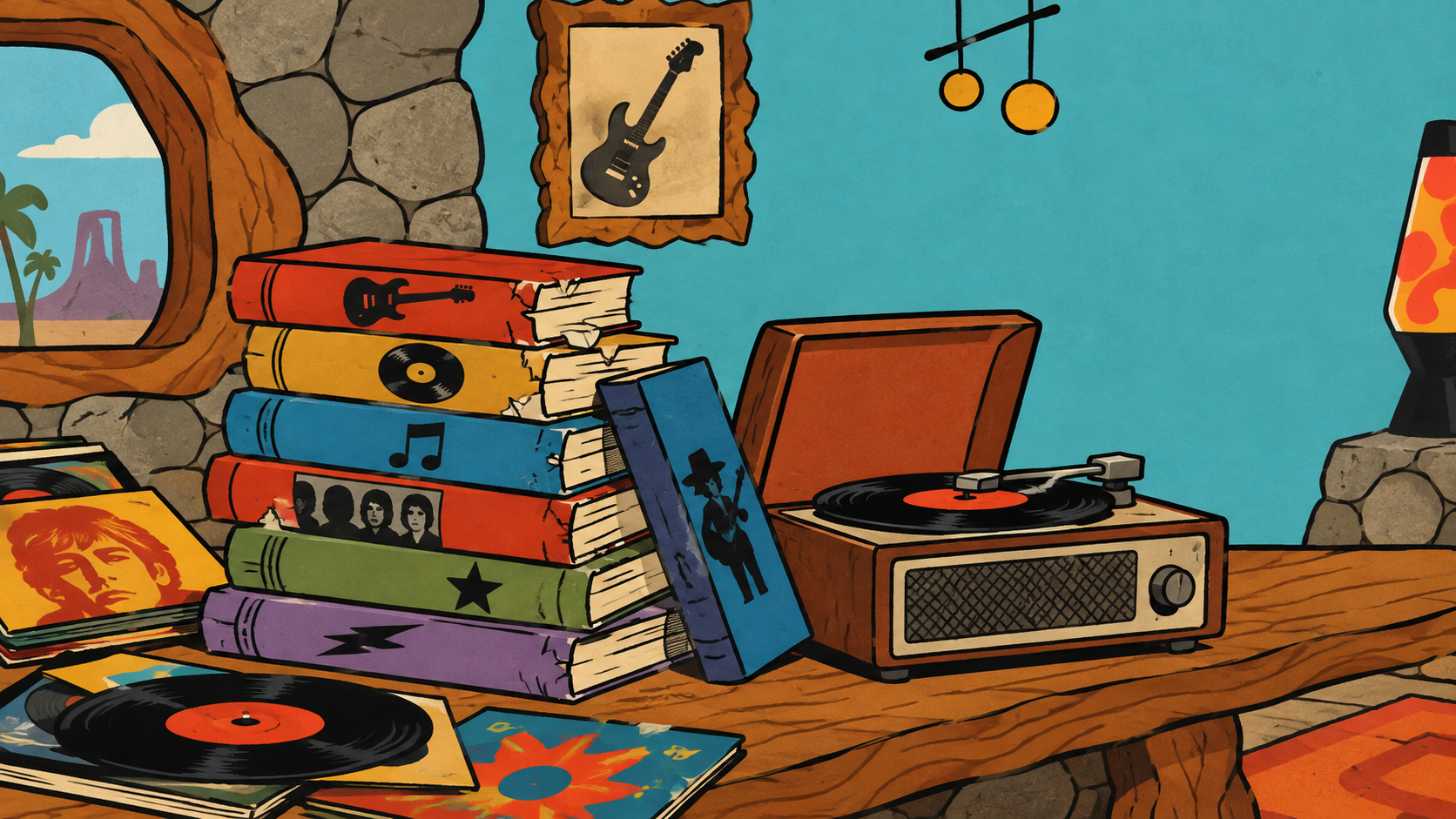
Before the smartphone arrived, I used to read.
A lot.
That might partially explain how very few of these books I love about music were written in the past 15 years.
Anyway, of course this can't claim to be a "Best 10 Books About Music" post, only a "favorite" list of the ones I've read.
If you care about music like I do, hopefully you'll pick one of these up and enjoy it.
They're all terrific for wildly various reasons.
1 - Beneath the Underdog (Charles Mingus) Charles Mingus autobiography
Not only the best music autobiography I've ever read, the best autobiography period I've ever read and one of my favorite books of all time.
The jazz bassist and composer, Charles Mingus has been a longtime favorite of mine.
I've always loved jazz but let's face it, lots of it can be pretty stilted, mannered, and effete.
Not Mingus.
His music always sounded like it was barely holding things together.
The same could be said of Beneath The Underdog.
It shifts from first-person to third-person and even second-person voice.
There's plenty of bragging and sexual exploits like a black Henry Miller.
There's a lot of completely unreliable narration, just like Chuck Barris' oddball autobiography.
It's a work of art, not a memoir.
2 - Psychotic Reactions and Carburetor Dung
(Lester Bangs) Music reviews
You might know Lester Bangs as the rock critic played by Philip Seymour Hoffman in the movie Almost Famous.
Or you can think of him as the dean of music criticism.
His reviews were basically jumping off points for terrifically written detours and observations that often had little to do with the music being reviewed.
The only thing bad that I can say about his writing is that he may have inspired more awful writers than anyone other than Jack Keruoac.
He made literary riffing look easy.
It isn't.
I particularly remember great essays there on Lou Reed's unlistenable Metal Machine Music, Van Morrison's Astral Weeks, and a long story inspired by listening to Rod Stewart's "Maggie May" which had little or nothing to do with the song.
He died young at 33 and I really wonder what he would have come up with had he lived.
3 - The Dirt: Confessions of the Worlds Most Notorious Rock Band (Motley Crue & Neil Strauss) Group autobiography
You don't see many group autobiographies, especially by guys who may have written more books than they've read.
I'm always amazed when egotistical rock stars who have final cut and are so egotistical to be unaware of how much they look like assholes when putting out films that make them look terrible (Mike Love with the ABC tv movie about The Beach Boys, Glenn Frey and Don Henley with the Showtime documentary of The Eagles).
There's plenty of fun rock-and-roll excess here and there is a certain level of watching a car crash - in the case of Vince Neil's vehicular manslaughter, literally.
But why I love this book so much is that it does the rarest of things: captures the thought process of genuinely stupid people.
4 - Eating the Dinosaur (Chuck Klosterman) Cultural criticism
Fargo Rock City is perhaps the Chuck Klosterman book that should be here about music while Eating the Dinosaur covers a lot more range besides music.
Klosterman is a true original thinker, dreaming up plenty of fascinating "what-if" considerations.
But he got his start as a rock critic and there are some great ones about music here.
There's a great Garth Brooks piece about identity, and a very Klostermanian comparison between Kurt Cobain and cult leader David Koresh.
But I really have it here for "ABBA 1, World 0" which, to me, is the greatest longform dissection of a single song that I've ever read, about "The Winner Takes It All."
The mindfuck of Bjorn Ulvaeus writing it about his breakup with singer Agnetha Faltskog - where she had to sing it, in his version of what could be going through her head - has a screwed up rock relationship dynamic too trippy even for Fleetwood Mac.
5 - This Is Your Brain on Music (Daniel Levitin) How we process music
Essential reading for songwriters, in my opinion.
This space could have been occupied by the also great Musicophilia by Oliver Sacks.
If you wonder why you like what you like, this is the book for you.
From the "shave and a haircut" rhythm and melody, childhood taunt "na na na na na na" melody is actually worldwide and almost preternatural, or how novices still know something's not quite right about songs played in the wrong key - a ton of great observations about how one's culture establishes what will sound good to somebody, and the delicate balance of the familiar and the new.
My only warning is that the author was a studio engineer who later became a neurologist and he's got a lot of self-serving humblebrags in here.
6 - Laurel Canyon: The Inside Story of Rock-and-Roll’s Legendary Neighborhood (Michael Walker) Deep dive in 60s/70s Los Angeles music scene
If you love Neil Young, Joni Mitchell or that era of music, this is a great read.
If you've lived in Los Angeles and love history, it's a great read.
For somebody like me who loves both, this book really pays off.
The various hangout houses of the era really come alive in the prose, you can picture them.
This wasn't all about hippie musicians being soft; Stephen Stills and Graham Nash are gnarlier than you think.
It's Frank Zappa who turns out to be the neighborhood's narc.
This is either pop history or at least world-class gossip.
7 - Life (Keith Richards) Surprisingly deep memoir
Keith Richards has always, unfairly, been considered a cartoonish avatar of rock excess.
But the deeper you go with Keef, like in the Scorsese documentary of the band or Hail Hail Rock n' Roll about Chuck Berry with Keith as the dedicated bandleader, then you already know that he's reflective as any pop star and absolutely not a clown.
Not that there aren't some great drug bust stories in here.
But Richards is tremendously eloquent about his life while being candid about successes and mistakes made.
And there are multiple sections about his thought process as songwriter and producer.
My favorite observation here: Even though Keith is an electric guitar legend of perfect rhythm guitar, he said if you can't walk into a bar solo with an acoustic instrument and put on a good show, then you're not really a musician.
8 - Hammer of the Gods (Stephen Davis) The story of Led Zeppelin
Written from an outside perspective, so it's obviously smarter than the Motley Crue book (plus the Zeppelin members are grades smarter than Crue).
It's funny when you actually listen to their lyrics which are frequently rock and roll nerd stuff about Lord of the Rings, but this is the quintessential rock band with stories of excess on the road.
Their manager, Peter Grant, was shown here to be a major engine of the band.
Come for the musical observations but stay for the tales of trashed hotel rooms and also the all-time rock and roll "fish tale" of a mud shark and a groupie.
9 - Mystery Train
(Greil Marcus) Straight-up rock criticism
Lots of rock critics from the Rolling Stone school like David Fricke or Kurt Loder can take a halfway-decent observation and over-intellectualize it to the point where they make The Clash or Prince sound boring.
Greil Marcus, on the other hand, actually delivers when he's proposing a masters-level thesis in print.
Most of the pieces that make up Mystery Train are loosely tied together to try to represent what America is in music.
That larger point veers towards being overwrought, but the individual essays are pretty damn good.
The treatises on The Band and Randy Newman could not be any more up my alley.
10 - No One Here Gets Out Alive (Danny Sugarman) Somewhat of a biography of Jim Morrison
What drives me crazy is that Jim Morrison treated himself like a fascinating legend, and then since he died early, he's considered one.
Morrison and The Doors are a polarizing band; I think every teenager since 1970 thinks the faux-darkness of songs like "Break On Through" or "The End" are deep.
Then they grow up.
This book failed in an amazing way: it tries to make Morrison a rock-and-roll god but it left me more aware of the pretentious, frequently drunk human being underneath the legend.