"Turn it up," is how "Sweet Home Alabama" is introduced, and the phrase represents a popular sentiment in rock & roll.
"This one goes to 11" and "If it's too loud, you're too old" all advocate that music is best heard loud.
Keep that in mind when picturing this: I've played in a brewery looking out over about 15 happy faces, 30 disinterested backs at the bar, and a large decibel meter constantly telling us how good or bad of a job we were doing staying under 90 dB in volume.
We waged a valiantly quiet but ultimately losing battle with the 90 dB threshold.
Where Bookings Go Wrong for Bar & Band
I'll return to that playing situation in a moment.
But plenty of bands perform in the wrong bar - and plenty of bars go ahead and have the wrong band play there.
Why?
Everybody's desperate: bands are starving for good gigs, while bars are fighting for existential financial survival every month.
Bands want gigs for pay and an audience, obviously.
Bars hope that live music can bring in new business.
So, both sides make some bad decisions.
Five-piece bands on tiny makeshift stages.
Full bands where neighbors object.
Cover bands in a bar that doesn't pay PROs like ASCAP or BMI their dues.
There are so many reasons for mismatches: noise constraints, lack of a stage area, or even genre (e.g. funk band in a country bar is a very uncomfortable mismatch).
Noise
The opening anecdote with the decibel meter was at a terrific brewery in Escondido, CA, Jacked Up Brewery.
It's a real bummer that a married couple of brewers opened up a terrific local brewery in a business park - and just four years later it closed.
They wanted to bring local music and craft beer lovers together in one place, and they were succeeding.
Michael Poulson, the co-owner, invested in a terrific stage with state-of-the-art speakers and board - believe me, a small bar owner putting money into a sound system is a rarity.
But almost immediately, they were getting noise complaints.
Even though the bar was in an industrial park with homes nowhere near, they faced an almost impossible situation.
Poulson summarized it, "We can have live entertainment. You just can’t hear it outside, which is an impossible condition to comply with. You just can’t do that."
The levels established at local community meetings were an absurdly low level of 90 decibels.
A light jazz combo might be able to keep it down there, but once an amplifier is on 3 or 4 or the drummer hits a snare drum with a stick instead of a brush, it's game over.
Ambient noise of 15 people drinking at the bar (with no music, not even a radio or ballgame on the TV) would result in 65 to 70 dB right away.
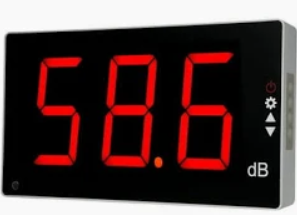
This picture of a decibel meter on the left is so low, the photographer must have been whispering while taking the photo.
So, when I say it was an impossible show for us to play, I'm not at all blaming the venue.
We just wanted a place to play - and the Poulsons were trying to create a real community space and bring in music-loving drinkers.
It was doomed.
Other places that have shushed us, I'm not necessarily as charitable with.
Stage Size
There are thousands of bars in the U.S. with a "stage" consisting of a 5x5 foot six-inch riser in a corner.
I partially blame the comedy boom of the 1980s responsible where every dive bar and cafe instituted a weekly "comedy night."
Those spaces don't really qualify as stages.
Yet full bands are asked to play them anyway.
My favorite version of good overcrowding used to be at Molly Malone's in Los Angeles on Fairfax, which had world-class Irish bands there.
Does anybody remember the incredible Garrison White?
It's like having Van Morrison playing down the street.
Often 6 or 7 dudes with fiddle, bass, tiny drum kit, bodhran, guitars, crammed in there while we in the crowd were just as jammed on a Friday night in a terrific Irish bar.
My bad version of stage overcrowding?
Every time my band has been asked to play on something similar.
It's one thing to crowd into a tiny space if the audience is also packed like sardines.
A four-piece band playing on a piece of plywood over some bricks in a no-traffic wine bar is another thing.
Stage Placement
Sometimes it's not that the stage area is small; it's oddly placed.
I'll give you two visual examples.
The first is the Bigfellas at a crazy musical residency at The Last Call in San Diego.
Read that article for details, but we were situated in the weird crack of the restaurant where nobody could walk in, they would just hear whatever Bigfellas rock tumbled out there like it's coming through the radio (if we were sounding good that night). Also, bonus points to all of the gigs that didn’t have stage room for my keyboard, and we instead just put it on a restaurant table:
The second is with my jam band friends The Water Spots last year at Union Tap in Encinitas, CA.
God love them, they were great to us and plenty of Deadheads at bar tables loving us.
But we were stationed where servers go in and out of the kitchen.
I'm not joking:
Again, I'm not complaining.
These businesses are trying to do their best, and both of the above bars were kind and generous to us.
But these experiences do end up as classic war stories for bands about bad gigs.
Cover Songs
One unheralded category for bad fit is if a venue is able to have bands play cover songs.
To do so, they must be dues-paying contributors to PROs (Performance Rights Organizations) like ASCAP or BMI.
A terrific example was Anderson's General Store on Guemes Island across from Anacortes, WA.
We loved this place, it was The Bigfellas' second home.
But at some point, there was a new owner who was absolutely despised by the residents of the island.
We have a full account of it here, where we just know somebody dropped a dime on the bar for not paying songwriter royalties.
There was also a dive bar in Point Loma, CA called Desi's, that we also loved.
An oddball tri-level dive bar that we found charming.
They also didn't pay for covers and told us while setting up.
This was a 3-hour gig, mind you.
Most bands can't go that long with originals.
Fortunately or unfortunately, we could.
My favorite was a local San Diego bar that had the same restrictions but didn't tell us.
So, when we started drifting into the opening of Beck's "Where It's At" the booker ran from the other side of the bar and tackled us.
Or take the booker who loved The Water Spots (again, a jam band) in Cardiff, CA, and who absolutely loved our stuff and the Grateful Dead.
She once gave us a note before starting: "The owner's daughter is bartending tonight and she'll rat you out.
The owner HATES the Dead."
OK, great tip for a jam band.
Duly noted.
Who's Booking Us
I want to be clear; this isn't a litany of complaints about clueless owners or club managers.
It's mostly a litany of funny stories.
But I'm very sympathetic to everybody in this local band ecosystem.
- Bookers provide owners/managers with a service - they’ve got to deal with flaky musicians and picky owners.
- Bar owners/managers just want to draw a crowd.
This is their entire livelihood.
Pissing off their neighbors is as bad as having an empty Friday night.
- Local bands have the least power of anybody in this equation.
They want to play music, work hard, and are used to getting paid very little for their craft.
As the expression goes, "A gig's a gig."
The fact that these mismatches keep happening shows how desperate everybody involved is.
Unfortunately, these screwups or silly bookings are just a part of doing business.
At least they provide some funny stories.

 The levels established at local community meetings were an absurdly low level of 90 decibels.
A light jazz combo might be able to keep it down there, but once an amplifier is on 3 or 4 or the drummer hits a snare drum with a stick instead of a brush, it's game over.
The levels established at local community meetings were an absurdly low level of 90 decibels.
A light jazz combo might be able to keep it down there, but once an amplifier is on 3 or 4 or the drummer hits a snare drum with a stick instead of a brush, it's game over.
